




3 educators answered this one
Remove Phones Before Focused Work
When phones start competing with learning, I keep the policy simple and consistent: phones don't stay in the room during focused work time. I set that expectation at the start of class, then I treat it like any other routine, not a debate. The script is: "Phones out of the room, not on silent and not face down, so your brain can lock in for the next block." If a student hesitates, I repeat the same line calmly and point to the routine, instead of arguing about the reason in the moment. I also frame it as a focus tool, not a punishment, because everyone's attention slips when the phone is nearby. Over time, the lack of exceptions is what makes it stick and what prevents daily power struggles. And because I stay steady and respectful with the same words each time, it protects the relationship while still protecting learning time.
Build a Predictable Phone Ritual
Wayne LowryExecutive Director / CEO · Sunny Glen Children's HomeKids don't fight routines; they fight people. That's the first thing I'd tell any teacher. At Sunny Glen Children's Home, we've spent nearly 90 years working with children whose lives have been shaped by crisis and chaos, and the best tool we have is never a stricter rule. It's a predictable structure that never moves. A rule feels like an adult's opinion. A routine feels like gravity. So don't announce a phone policy, build a phone ritual.
Here's the routine I'd steal: phones get parked the moment students walk in, every single day, no exceptions, no renegotiating. The entry is the intervention. If the expectation lives at the door, you never have to enforce it mid-lesson, which is exactly where all the power struggles start.
The script matters as much as the structure. Keep it short, neutral, and about the situation, never the kid. Something like: "This isn't about trust, it's about focus. Phones park, brains engage, you get it back at the bell. Same deal every day." Then drop it. No lecture, no eye-roll, no debate. Calm repetition is what makes it stick, and it's what separates a boundary from a battle.
The piece most people miss: explain the why once, up front, and make it about them. "Your attention is the most valuable thing you own, and I'm protecting it." The kids we serve in residential care have had plenty of adults issue commands without reasons. When you give the reason first and stay consistent after, you're not just managing phones, you're proving that adults mean what they say. That's the heart of our mission: restoring hope and rebuilding trusting relationships. Structure delivered with warmth does both at once.
One last thing: connect before you correct. Greet them at the door, use their name, and the routine runs itself. Structure without relationship breeds rebellion. Relationship without structure breeds chaos. Bring both, and the phone fight simply disappears.
Pair Phone Limits With Connection
Veronica Moyachildren’s wellness expert, author & entertainerPhones pull attention because they deliver instant novelty—kids aren't "bad," their brains are doing what brains do. A routine that protects learning and relationships: a clear, predictable phone park (same place, same time every period) plus a relationship-first re-entry.
When a student resists, I coach teachers to separate the behavior from the bond: "I care about you AND the phone waits here so we can learn together." Keep the tone calm; shame fuels sneakier phone use. Pair the limit with a short regulation tool—three breaths or a one-minute stretch—before diving into the lesson so the boundary doesn't feel like punishment.
Offer Choices Within Clear Boundaries
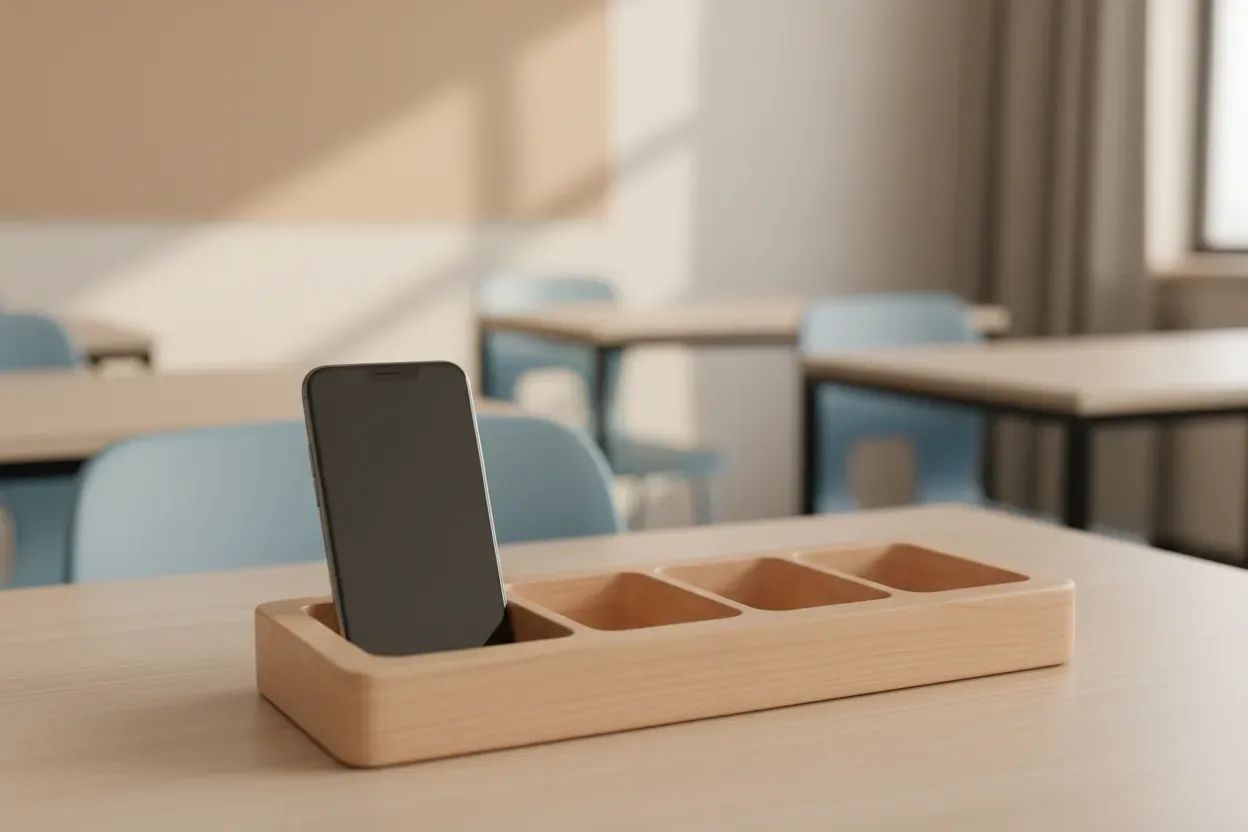
Students are more likely to follow phone expectations when they have some control over how they meet them. A teacher might let students choose between placing phones in a shared holder or keeping them silenced in a backpack. Choice can also include selecting a phone-free work spot when extra focus is needed.
The rule should stay the same even when the method changes: phones must not interrupt learning. Offer clear options at the start of class to reduce arguments later.
Design Lessons That Hold Attention
Phone rules work better when class activities are active, clear, and worth a student’s attention. Lessons can include discussion, hands-on tasks, short challenges, and partner work that keep students involved. When every student has a role, there is less empty time for checking messages.
Teachers can also give simple paper tools, such as note guides or question cards, so phones are not needed for basic tasks. Build engaging routines that make learning the main focus.
Set Proportionate Consequences in Advance
Consequences should be known in advance and should match the size of the disruption. A first reminder can be quiet and private, which protects the student from embarrassment. If the behavior continues, the phone may be placed in a designated space until the end of class.
Repeated problems can lead to a family contact or a school-based next step. Post the process clearly so everyone understands what will happen.
Invite Families to Reinforce Expectations
Families need a simple explanation of the classroom phone policy and the reason behind it. The message should state when phones may be used, where they belong during lessons, and how urgent family contact will be handled. Clear communication helps prevent confusion when a phone is collected or a student receives a reminder.
Families can also support the same habits at home by discussing sleep, notifications, and focused work time. Send the policy home early and invite families to support it.
Teach Students to Manage Distractions
Phone use is a self-management skill that students can learn through practice. Teachers can explain how alerts, games, and social media are designed to pull attention away from important tasks. Brief reflection questions can help students notice when phone use affects their work or mood.
Students can then practice tools such as turning off alerts, using focus settings, or putting a device out of reach. Teach one focus habit this week and let students practice it.